How a redevelopment bet becomes a district
Two blocks of Gilman Street, West Berkeley. An ink factory, a decade of disrepair, and the twelve years it took to make a place out of square footage.
What people said
“Donkey & Goat, led by Tracey Rogers Brandt, is one of the great treasures of our Berkeley community. It has been inspiring to watch Tracey grow her presence in the wine world while never wavering from her ecological mission. We depend on truly enlightened businesses like Donkey & Goat to anchor our community's commitment to the highest quality, most delicious organic-regenerative products.”
On building the district
“Tracey was the pioneering winemaker at the 750 Gilman project and had the vision to bring a new kind of manufacturing to Berkeley. Her leadership built the thriving community of five wineries in the block that anchors the Gilman District.”
“As the dynamic force behind Donkey & Goat, Tracey has nurtured the development of the Berkeley wine block and in doing so, helped establish the Gilman District as one of the most exciting new places in Berkeley for visitors and locals alike.”
“Tracey has proven herself to be an incredibly thoughtful and strategic community partner as we work together to revitalize the Gilman District. She has been a generous and inclusive neighbor and proves her strong values through action.”
“During the early days of Covid, she successfully pivoted not just her own business, but also built countless opportunities for small businesses like ours… At the time, Daytrip was just a two-person pop up, and we've now grown into a successful Oakland restaurant, thanks in part to the many creative events Tracey brought us into.”
On the work itself
“Dazzlingly capable, and innovative, Tracey Rogers Brandt has not only proven herself to be a trailblazer and mentor in the wine community but is particularly savvy at the nuts and bolts of running the business… The success of Donkey & Goat was built specifically on her back.”
“Tracey's grape purchases since 2005 have transformed not only Goldbud Farms, but the entire AVA's small and localized market… Since 2020, mother nature has doled a succession of natural disasters. Having Tracey as a partner has provided Goldbud the morale and stability needed to continue to inch forward through the difficult days.”
“Tracey is a pioneer in the wine industry, having launched one of the first natural wineries in all of California… She is a powerhouse in her community and in the world-wide natural wine community in general.”
“Tracey is not only a profoundly creative winemaker but she brings enormous discipline, tenacity and vision to the business of making wine… the vintner's art, the operator's attention to detail, the financial manager's clarity and caution.”
“Tracey Rogers Brandt is nothing less than a powerhouse entrepreneur with a clear brand vision and a commitment to sustainability and quality… a community builder, dedicated to ensuring the success of her business while also lifting up other entrepreneurs and women-led projects.”
“Tracey Rogers Brandt has been a leader and an innovator in the wine industry for almost 20 years. She is esteemed and respected by both her industry colleagues, and a dedicated wine consumer following as well.”
What happened
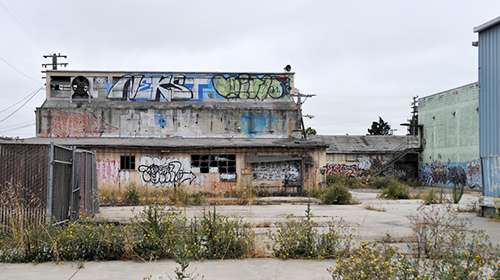
In 1906 a factory started making ink on two blocks of Gilman Street. It ran until 1999, then sat empty and decaying for a decade. In 2009 Orton Development bought the site. Buying it was a bet, not a plan.
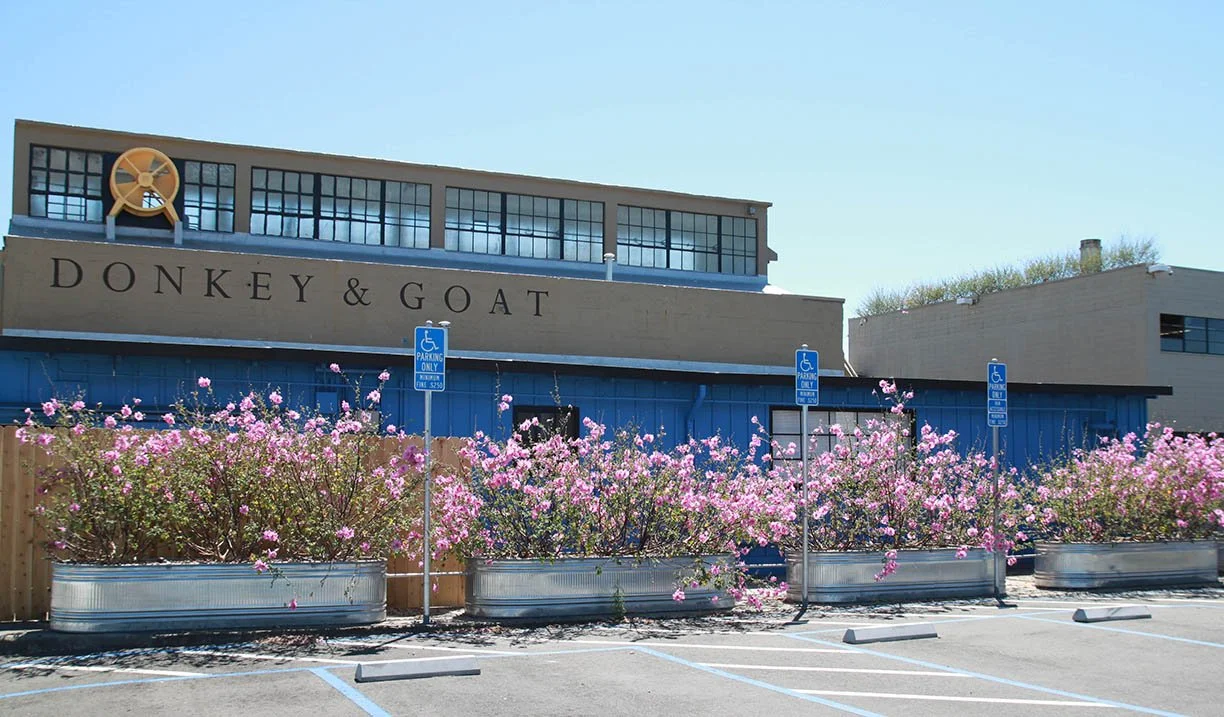
I signed my lease in 2011 — the first winery on the block, and the first manufacturing tenant since the ink factory closed. Most of the units were still empty, with graffiti-covered walls. We were still climbing out of the 2008 financial crisis, which was a near-lethal blow given it was also our first wildfire vintage. Two years and a few months later I took the redevelopment bet on the largest undeveloped manufacturing parcel in Berkeley before anyone had shown it would pay off.
A redeveloped building isn't a district. It's square footage. What makes a district is people choosing to be there on purpose, repeatedly.
Over the next five years I recruited the other wineries who joined the block — nobody assigned me that job. It grew to five anchor wineries plus an informal incubator. But the turning point wasn't persuasion, it was capacity: in 2016 I hired our first dedicated Tasting Room Manager and DTC Sales Director, and in 2017, with her leading much of the ground work, we cofounded what's now the Gilman District Merchants Association.
The sequencing is the part worth stealing. We built the grassroots coalition first — the residents, the small businesses, the neighborhood's longstanding pottery and artist community. Only then did we bring in Berkeley's Office of Economic Development, our council representative and Visit Berkeley. Institutional partners will join something real. They won't invent it for you.
The coopetition lesson
From 2017 to 2021 my winery hosted monthly First Friday celebrations — local musicians, chefs and artists in the cellar and tasting room over a full weekend. After the pandemic shelter-in-place order lifted, I led the creation of collaborative monthly events with the neighboring wineries and the Office of Economic Development, moving out of my own venue and into a closed-street block party, enabled by a temporary emergency order permitting alcohol service in the street. That was a deliberate move toward equitable opportunity for every winery on the block, not just mine.
At first my own revenue dipped as the other wineries picked up share of wallet. Then we found our rhythm: the whole pie grew, lifting every winery's revenue and every subscription wine club along with it. A textbook case for coopetition — and one I'd only argued for in theory until I watched it happen to my own P&L.
What the collaborative wine block produced
Year-over-year change at my winery.
Two honest footnotes. The 2022 staff-pay increase came without raising payroll — it was largely Square's boost to tip income. And when the emergency street-closure order ended, staying in the street would have cost thousands a month, so we moved the event inside the wine block instead, which required every winery to compromise so each had equal opportunity to earn.
What crisis taught me about resilience
Smoke reached several appellations in 2020. The following year the Caldor Fire tore through El Dorado, where 65% of my production was grown. Nearly all of it was lost. Both years arrived on top of a pandemic that had shut down in-person business — and the tasting room was a very large part of how we made our money.
Our lender, RSF Social Finance, had extended a line of credit and assumed our term loan in 2020, when our previous bank was acquired. In 2022, after the impact of several forces, we needed help to pay our growers following the new vintage — and, being a social lender, they were able to increase our line to support our farming partners. RSF wrote about it here. Our landlord worked with us too, to make sure we came through.
That's relationship-based flexibility. It's real, it worked, and I'm still grateful for it. It's also fragile: it depends on individual relationships holding, and it isn't something you can plan around.
The Gilman Wine Block learned to collaborate under similar duress. Formation was reactive rather than planned, which left us without a foundation for governance, shared economics or operations — and resting largely on a few relationships between the winery owners.
If I did it again, I'd build the shared structure and the shared reserves first — together, before any program ran, and long before an emergency arrived to test them.
The shoreline is about to change
The $100 million I-80/Gilman interchange, which I was describing to investors as a coming signal years before it opened, was completed in April 2025 — closing the bike and pedestrian gap between the Bay Trail and North Berkeley.
In March 2026 the Trust for Public Land secured an option on the former Golden Gate Fields racetrack, 161 acres of Albany and Berkeley shoreline, with the East Bay Regional Park District and both cities. In August 2026, $125 million in state funding was proposed toward the acquisition.
Three real things in the same square mile, over fifteen years. I don't claim to have caused any of them. But I read which public signals were durable, and built where they pointed.
Get in touch
For funders, collaborators, or anyone ready to restore and regenerate their place.
Direct
- tracey@circularpatterns.com
- 415.298.8816
- El Cerrito, California